Introduction to Spanish Seafood Paella
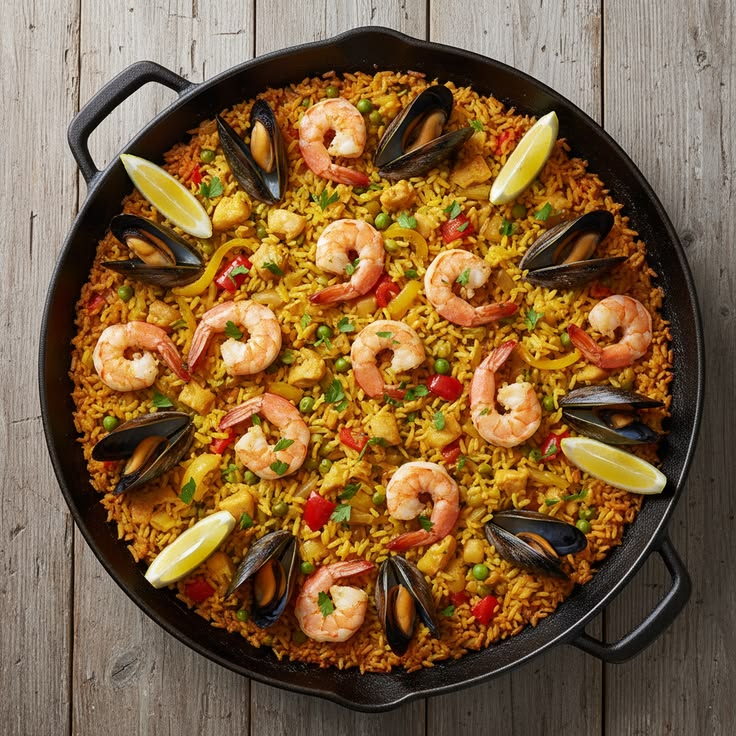
Spanish Seafood Paella is a vibrant and aromatic dish that embodies the essence of Mediterranean cuisine. Originating from the Valencian region of Spain, paella has become one of the most celebrated Spanish dishes worldwide. Unlike ordinary rice dishes, paella combines high-quality seafood, saffron-infused rice, and fresh vegetables, cooked together to create a symphony of flavors and textures.
This dish is traditionally prepared in a wide, shallow pan called a “paellera,” which allows the rice to cook evenly and develop the characteristic crispy bottom layer known as “socarrat.” Spanish Seafood Paella is not just a meal; it is a cultural experience that reflects Spain’s rich culinary heritage, coastal influence, and emphasis on communal dining.
Origins and Cultural Significance
Paella traces its origins to the fields of Valencia, where local farmers cooked rice over open fires using ingredients that were readily available—such as vegetables, rabbit, and occasionally seafood from nearby rivers or coasts. Over centuries, the dish evolved into specialized varieties, with seafood paella emerging as a popular coastal adaptation.
Seafood Paella is more than food; it is a symbol of Spanish festivity and togetherness. Often prepared for family gatherings, local festivals, or special occasions, the dish is served straight from the paellera, encouraging communal eating. Its vibrant colors and aroma make it a centerpiece in celebrations, embodying Spain’s lively and warm culinary culture.
Ingredients for Spanish Seafood Paella
Main Ingredients
- 2 cups Bomba or Arborio rice
- 4 cups seafood stock
- 200g shrimp, peeled and deveined
- 200g mussels, cleaned
- 200g clams, cleaned
- 150g squid, cleaned and sliced
- 1 onion, finely chopped
- 1 red bell pepper, sliced
- 2 tomatoes, grated or chopped
- 4 cloves garlic, minced
- 1/2 cup peas
- 2 tablespoons olive oil
- 1 teaspoon smoked paprika
- A pinch of saffron threads
- Salt and pepper to taste
- Fresh parsley and lemon wedges for garnish
Optional Enhancements
- Chorizo slices (for non-traditional fusion flavor)
- Red pepper flakes for heat
- White wine for deglazing and extra depth
Step-by-Step Preparation
Step 1: Preparing the Seafood
Clean and prep all seafood. Pat dry the shrimp, clams, mussels, and squid. If using clams and mussels, soak them in salted water for 20 minutes to remove any sand.
Step 2: Toasting Saffron
Lightly toast saffron threads in a dry pan for a few seconds to release their aroma. Then soak in 2 tablespoons of warm seafood stock for about 10 minutes.
Step 3: Cooking the Base
In a wide paella pan, heat olive oil over medium heat. Sauté onions and garlic until translucent. Add bell peppers and cook for a few minutes. Stir in tomatoes and cook until they form a thick, rich base.
Step 4: Adding Rice and Spices
Add the rice to the pan and stir to coat each grain with the tomato mixture. Sprinkle smoked paprika, salt, and pepper. Pour in the saffron-infused stock and remaining seafood stock, stirring gently to combine.
Step 5: Cooking the Paella
Bring to a gentle boil, then reduce to medium-low heat. Do not stir the rice once the liquid is added. Let it simmer uncovered, allowing the rice to absorb the stock and develop a slight crust at the bottom (socarrat).
Step 6: Adding Seafood
When the rice is halfway cooked, arrange shrimp, mussels, clams, and squid on top. Cover loosely with foil or a lid and continue cooking until seafood is fully cooked and shells open. Discard any unopened shells.
Step 7: Finishing Touches
Once the liquid is absorbed and the rice is tender, sprinkle peas, chopped parsley, and a drizzle of olive oil. Add lemon wedges for serving.
Step 8: Serving
Serve directly from the paellera for authenticity. Encourage communal dining, letting everyone scoop their portion while enjoying the aroma and presentation.
Flavor Profile and Texture
Spanish Seafood Paella delivers a unique combination of textures and flavors. The rice is tender yet slightly firm, infused with saffron and seafood essence. The shrimp and squid provide a delicate chew, while mussels and clams add a subtle briny flavor. Smoky paprika enhances depth, and the lemon juice brightens the dish. The crunchy socarrat at the bottom adds an irresistible contrast to the soft rice and seafood.
Health Benefits of Seafood Paella
- High in Protein: Shrimp, mussels, and squid provide lean protein.
- Rich in Omega-3: Seafood supports heart and brain health.
- Vitamins and Minerals: Tomatoes, bell peppers, and peas provide vitamins A, C, and K.
- Low in Saturated Fat: Olive oil is a healthy fat alternative.
- Balanced Meal: Combines protein, carbohydrates, and vegetables for a wholesome dish.
Tips for Perfect Spanish Paella
- Use a wide, shallow pan to allow even cooking of rice.
- Do not stir rice after adding the stock to form the socarrat.
- Use fresh seafood for the best flavor.
- Soak saffron to maximize aroma and color.
- Adjust seasoning gradually, as seafood adds natural saltiness.
Variations of Spanish Paella
1. Mixed Paella
Includes both seafood and meats such as chicken or rabbit.
2. Vegetarian Paella
Uses vegetables, beans, and artichokes instead of seafood for a meat-free version.
3. Black Paella (Arroz Negro)
Uses squid ink for a striking black color and intense seafood flavor.
4. Regional Coastal Paella
Coastal regions often include local seafood, like lobster or crab, for enhanced flavor.
Serving Suggestions
Serve Spanish Seafood Paella with fresh bread, a crisp salad, and chilled white wine for a full Mediterranean experience. Garnish with lemon wedges and parsley for added freshness and visual appeal.
Storage and Reheating
- Paella is best eaten fresh, but leftovers can be stored in the refrigerator for up to 2 days.
- Reheat gently in a skillet over low heat, adding a splash of stock or water to restore moisture.
- Avoid microwaving for best texture and flavor.
Common Mistakes to Avoid
- Using regular long-grain rice instead of short-grain or Bomba rice.
- Overcooking seafood, which becomes rubbery.
- Stirring rice after adding stock, which prevents socarrat formation.
- Using frozen or low-quality seafood.
- Skipping the saffron infusion, which is essential for authentic flavor and color.
Frequently Asked Questions (FAQs)
1. Can I make paella with frozen seafood?
Yes, but thaw it first and pat dry to avoid excess liquid in the pan.
2. Can I use regular rice instead of Bomba rice?
You can, but Bomba or Arborio rice absorbs stock better and creates the authentic texture.
3. How do I make the socarrat (crispy bottom)?
Cook over medium-high heat initially, then lower the heat and let the rice cook undisturbed.
4. Can I make paella in a regular frying pan?
Yes, if it is wide enough to allow even cooking, though traditional paellera is preferred.
5. Is paella gluten-free?
Yes, if all ingredients, including stock, are gluten-free.