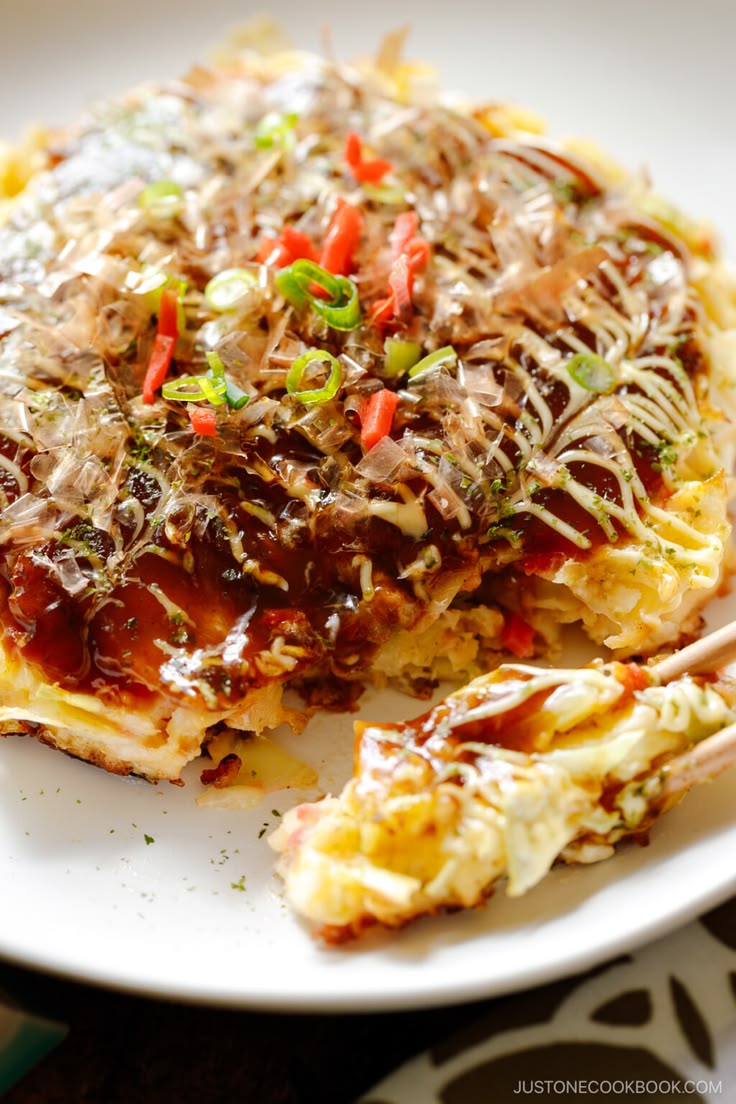
Introduction to Japanese Okonomiyaki
Japanese Okonomiyaki is a savory pancake that is both comforting and highly customizable. Often referred to as a “Japanese pizza” or “Japanese pancake,” it is a popular street food and home-cooked dish throughout Japan. The name “okonomiyaki” roughly translates to “grill what you like,” which perfectly reflects the flexibility of the recipe.
This dish combines a batter made from flour, eggs, and shredded cabbage with a variety of ingredients such as meat, seafood, or vegetables. Cooked on a hot griddle and topped with a rich sauce, mayonnaise, and garnishes, okonomiyaki offers a delicious balance of textures and flavors.
History and Cultural Background
Okonomiyaki has its roots in Japan’s street food culture and dates back to the early 20th century. It became especially popular after World War II when affordable ingredients were needed to create filling meals. Over time, regional variations developed, with Osaka and Hiroshima styles being the most well-known.
Today, okonomiyaki is enjoyed in restaurants, street stalls, and homes across Japan. It is often cooked on a teppan (iron griddle) and sometimes prepared by diners themselves, making it an interactive and social dining experience.
Ingredients for Okonomiyaki
Main Batter
- 1 cup all-purpose flour
- 2/3 cup dashi stock or water
- 2 eggs
- 2 cups finely shredded cabbage
Fillings
- 100g thinly sliced pork belly or bacon
- 1/2 cup shrimp or seafood (optional)
- Green onions
Toppings
- Okonomiyaki sauce
- Japanese mayonnaise
- Bonito flakes
- Aonori (seaweed flakes)
Optional Ingredients
- Cheese
- Kimchi
- Mushrooms
Preparation Steps
Step 1: Making the Batter
In a large bowl, mix flour and dashi stock until smooth. Add eggs and combine thoroughly. Fold in shredded cabbage and green onions.
Step 2: Adding Fillings
Add your choice of fillings such as pork, shrimp, or vegetables into the batter. Mix gently to distribute evenly.
Step 3: Heating the Pan
Heat a non-stick pan or griddle over medium heat and lightly oil the surface.
Step 4: Cooking the Pancake
Pour the batter onto the pan and shape it into a thick round pancake. Place slices of pork belly on top. Cook for 4–5 minutes until the bottom is golden brown.
Step 5: Flipping
Carefully flip the pancake and cook the other side for another 4–5 minutes until fully cooked.
Step 6: Adding Toppings
Transfer to a plate and drizzle with okonomiyaki sauce and mayonnaise. Sprinkle bonito flakes and seaweed on top.
Step 7: Serving
Serve hot and enjoy immediately for the best taste and texture.
Flavor Profile and Texture
Okonomiyaki delivers a rich and savory flavor with a slightly sweet and tangy sauce. The cabbage provides freshness and crunch, while the batter gives a soft and fluffy texture. The toppings add layers of umami and visual appeal.
The combination of crispy edges, tender interior, and flavorful toppings makes each bite satisfying and unique.
Health Benefits
- Vegetable-Rich: Cabbage provides fiber and vitamins.
- Protein Source: Eggs and meat contribute protein.
- Balanced Dish: Combines carbohydrates, protein, and fats.
- Customizable: Can be made healthier with different ingredients.
Tips for Perfect Okonomiyaki
- Do not overmix the batter.
- Use medium heat to cook evenly.
- Flip carefully to maintain shape.
- Use fresh cabbage for best texture.
- Add toppings just before serving.
Regional Variations
1. Osaka Style
All ingredients are mixed together before cooking.
2. Hiroshima Style
Ingredients are layered instead of mixed, often including noodles.
3. Modern Variations
Include cheese, seafood, or fusion flavors.
Serving Suggestions
Okonomiyaki is typically served as a main dish but can also be enjoyed as a snack or shared meal. It pairs well with soups, salads, or light side dishes.
Storage and Reheating
- Store leftovers in the refrigerator for up to 2 days.
- Reheat in a pan for best texture.
- Avoid microwaving to maintain crispiness.
Common Mistakes to Avoid
- Using too much batter, making it dense.
- Cooking on high heat, causing burning.
- Not flipping properly.
- Adding too many fillings.
Frequently Asked Questions (FAQs)
1. Can I make okonomiyaki vegetarian?
Yes, simply omit meat and use vegetables or tofu.
2. What can I use instead of dashi?
Water or vegetable broth works as a substitute.
3. Is okonomiyaki healthy?
It can be healthy depending on ingredients and portion size.
4. Can I freeze okonomiyaki?
Yes, but texture may change slightly after reheating.
5. What is the best pan to use?
A non-stick pan or griddle is ideal.